Economist · Stanford University

Krishna
Sharma.

Research Fellow, Hoover Institution
PhD in Economics, Clemson University

I study how institutions shape innovation, the movement of knowledge, and the adoption of technology.

My research connects skilled migration and entrepreneurship with university technology transfer, public policy, and AI governance.

About my work

I am a Research Fellow at the Hoover Institution at Stanford University, working with the State and Local Governance Initiative. I received my PhD in Economics from Clemson University in 2025.

My doctoral research examined how international experience shapes entrepreneurship and innovation in India. My current work extends this interest in knowledge circulation to university intellectual property policies, the governance of AI, and economic measurement. I also work with NAAMII in Nepal on AI and society.

01 / Research

How knowledge
becomes innovation.

Applied economics, original data, and institutional analysis.

01

University technology transfer

Communication as Governance

How university intellectual property policies communicate ownership, disclosure, and commercialization responsibilities. I use a historical policy corpus and computational text analysis to study institutional differences.

More about this research

This working paper develops a Policy Communication Index. Related projects examine changes in policy definitions and the relationship between communication, inventor–administrator coordination, and technology-transfer outcomes.

Working paper
02

AI governance

Artificial Intelligence, Trust, and Accountability in a Low-Capacity State

With I. Giri and R. N. Shrestha. Survey evidence from professionals in Nepal on trust, perceived risk, and expectations of accountability across institutional settings.

More about this research

The study uses original survey data from 343 professionals across eight sectors. It examines sectoral differences in trust and the role of accountability expectations in AI adoption. Future work extends these questions to comparative institutional settings.

Working paper
03

AI & economic measurement

AI-Assisted Economic Measurement from Surveys

With Tiancheng Wang. Using public employee pension choice as an application, we examine how language models can help identify the structure of survey measures and distinguish beliefs from constraints.

More about this research

“AI-Assisted Economic Measurement from Surveys: Evidence from Public Employee Pension Choice” develops an iterative framework for examining survey instruments. Validation and the interpretation of the resulting measures are central to the project.

Under review
04

Regulation & digital markets

Regulatory Migration to Europe

With K. R. Bhatt and I. Giri. We examine how U.S. securities enforcement is followed by changes in the location of initial coin offering activity.

Revise & resubmit

Ongoing projects

Skilled mobility and career pathways
Education, employment, and return migration between India and the United States.

Time to Major Decision in Federal Innovation Programs
Administrative processes in SBIR and STTR.

Capital Continuation in the Full Spectrum of Private Markets
Startup fundraising and follow-on capital, with P. Basnet.

02 / Selected publications

Research in print.

Full publication record ↗
  1. Quantitative Easing and Foreign Holdings of U.S. Treasuries: A Descriptive Study from 2008 to 2023

    Cogent Economics & Finance

    2026
  2. Social media discussion and short-horizon stock returns: evidence from a retail coordination episode

    Digital Finance · With P. Basnet and K. R. Bhatt

    2026
  3. Mechanization and downside income risk: Evidence from three Terai districts in Nepal

    Agricultural & Environmental Letters

    2026
  4. Rental markets and the mechanization of smallholder agriculture: evidence from Nepal’s Terai

    Applied Economics Letters

    2026
  5. The migration paradox: Why remittances fail to stimulate agricultural investment in Nepal’s Terai plains

    Economics Bulletin · With R. N. Shrestha

    2025
  6. Rental market of pump-sets in the central and western parts of Nepal plains ↗

    Asia-Pacific Journal of Rural Development · With B. Goswami

    2020

03 / Teaching

Questions welcome.
Learning comes first.

Teaching statement ↗

My teaching rests on mutual learning, practical relevance, and learning from mistakes.

I connect economic concepts to everyday decisions and public policy. Through discussion, visual explanations, and opportunities to revisit errors, I help students develop the confidence to reason independently.

शिक्षामूलं धर्मः

Education is the foundation of righteousness.

अध्ययनं सर्वधर्मानां मूलम्

Learning is the root of all virtues.

Two Sanskrit expressions that inform the values I bring to the classroom.

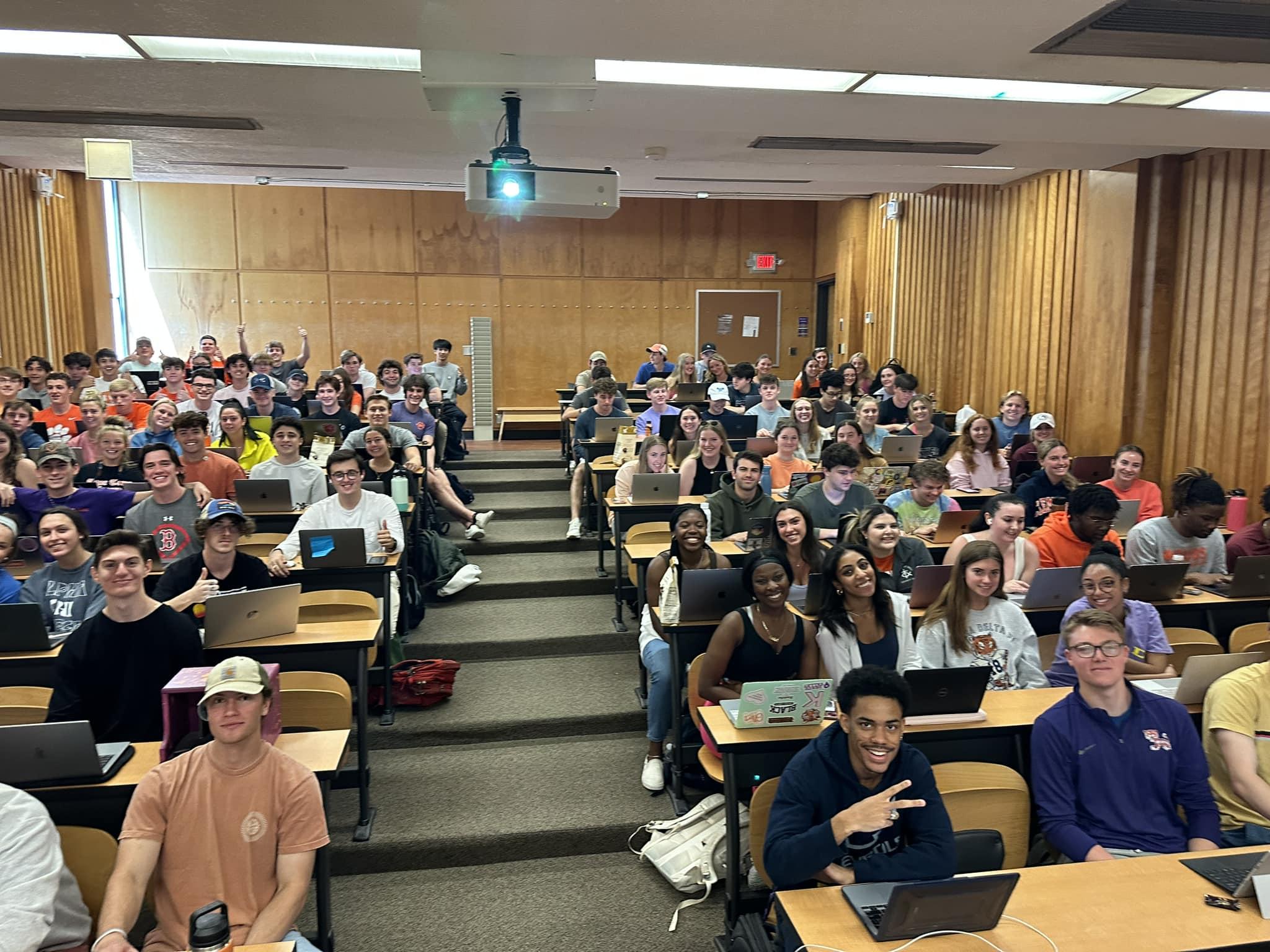
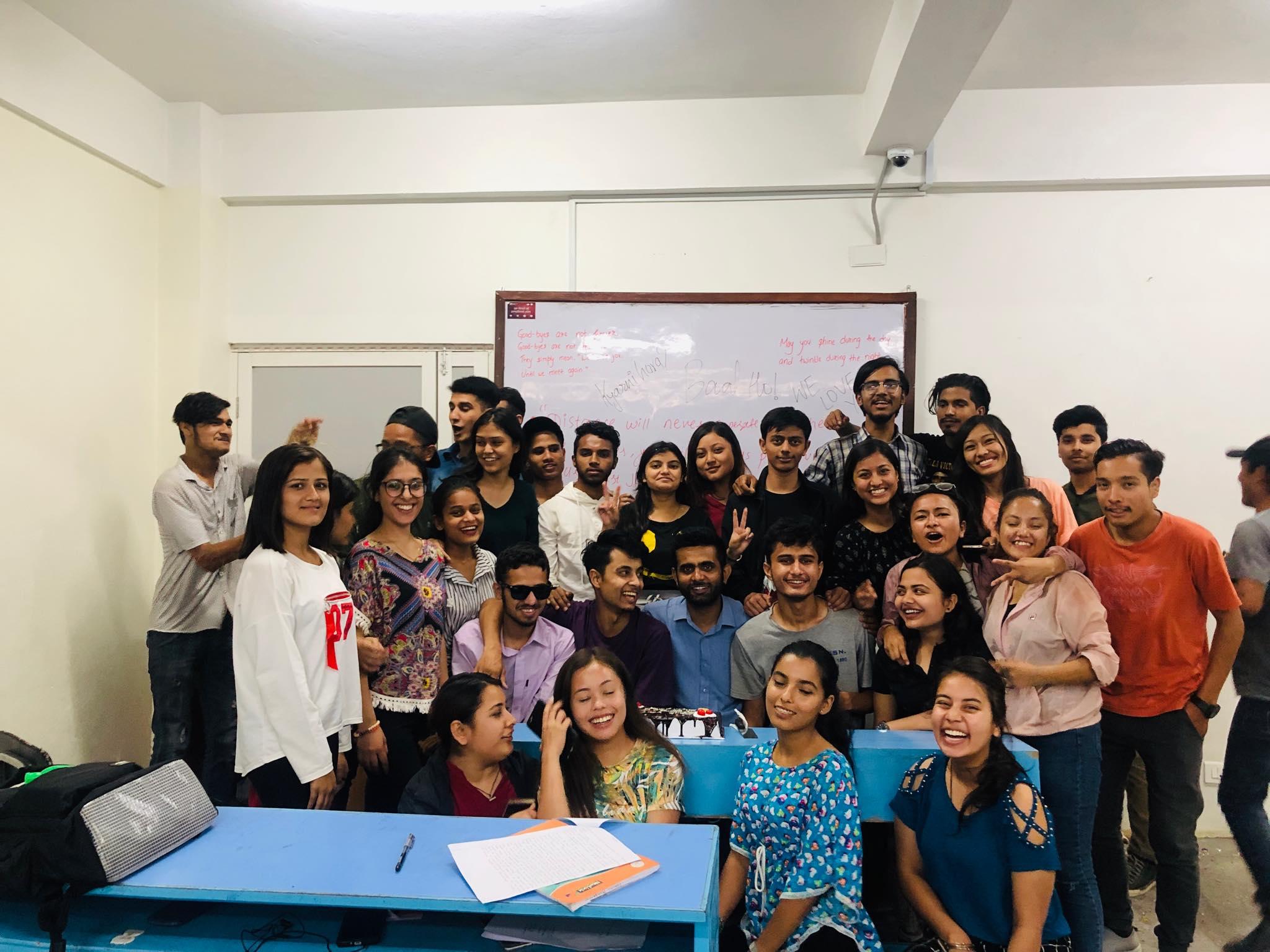
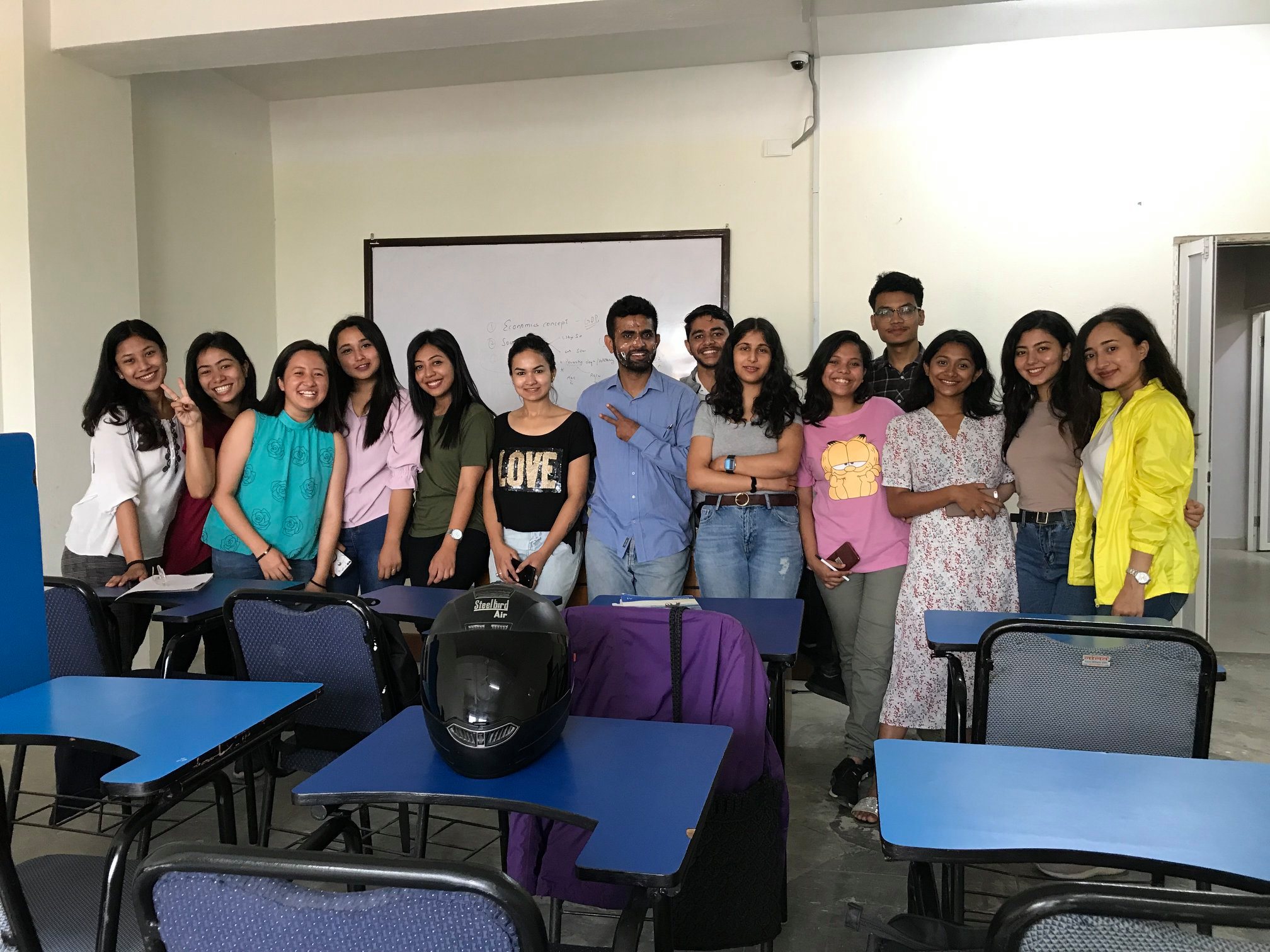
I have taught macroeconomics and money and banking at Clemson University, and intermediate microeconomics and macroeconomics at Kathmandu University. My developing teaching interests include public policy, the economics of innovation, technology policy, and AI governance.

Student evaluations · Clemson

4.62 / 5

Money and Banking · Fall 2023

39 / 39 responses
4.50 / 5

Macroeconomics · Spring 2023

104 / 125 responses
4.02 / 5

Macroeconomics · Fall 2022

42 / 50 responses

Reported overall averages. Courses and evaluation instruments differ.

Student-Nominated TA of the Semester

Fall 2021 · Clemson Undergraduate Student Senate

“Professor Krishna encouraged us to join the class discussion even if we weren’t sure if we were right.”

Student evaluation · Money and Banking, Fall 2023

04 / Public writing

Economics beyond
the classroom.

Essays on institutions, technology, and economic development.

Earlier essays in English and Nepali

Ask about my work

A few good
questions.

A guide to my research and teaching, with prepared answers and links to the source materials.

Have another question? Email me ↗
What connects your research?

I study how institutions shape innovation, the movement of knowledge, and the adoption of technology. My work connects skilled migration and entrepreneurship with university technology transfer, public policy, and AI governance.

What is your PhD research about?

My doctoral research at Clemson examined how international experience shapes entrepreneurship and innovation in India. My job-market paper links startup profiles, founders’ education and employment histories, and patent records to study local, returnee, and mixed founding teams.

How does your work connect to AI governance?

My research examines trust and accountability in AI adoption using survey evidence from professionals in Nepal. A separate project with Tiancheng Wang studies AI-assisted economic measurement using public employee pension-choice surveys. These projects ask how institutions shape the use and interpretation of AI.

What do you teach?

I have taught macroeconomics and money and banking at Clemson, and intermediate microeconomics and macroeconomics at Kathmandu University. My developing teaching interests include public policy, the economics of innovation, technology policy, and AI governance. My approach emphasizes mutual learning, practical relevance, and learning from mistakes.

Where can I find your materials or get in touch?

My CV, research statement, teaching statement, and diversity and mentoring statement are available on this site. For manuscripts, research discussions, or academic opportunities, please email ksharma3@stanford.edu.

05 / Contact

Let’s exchange ideas.

For research, teaching, and academic opportunities: